Camp Sierpinski
Fostering curiosity, connection, and discovery through engaging and challenging mathematics.
- info@nationalmathcamps.org
We have made the tough decision that Camp Sierpiński will not be offered in summer 2027. We’re working toward bringing a middle school camp back to the East Coast in the next few years.
If a West Coast location works for your family, we encourage you to consider Camp Conway (ages 11 – 14), or our new early high school camp (ages 13 – 16).
Join our mailing list to stay in the loop.
Camp Overview
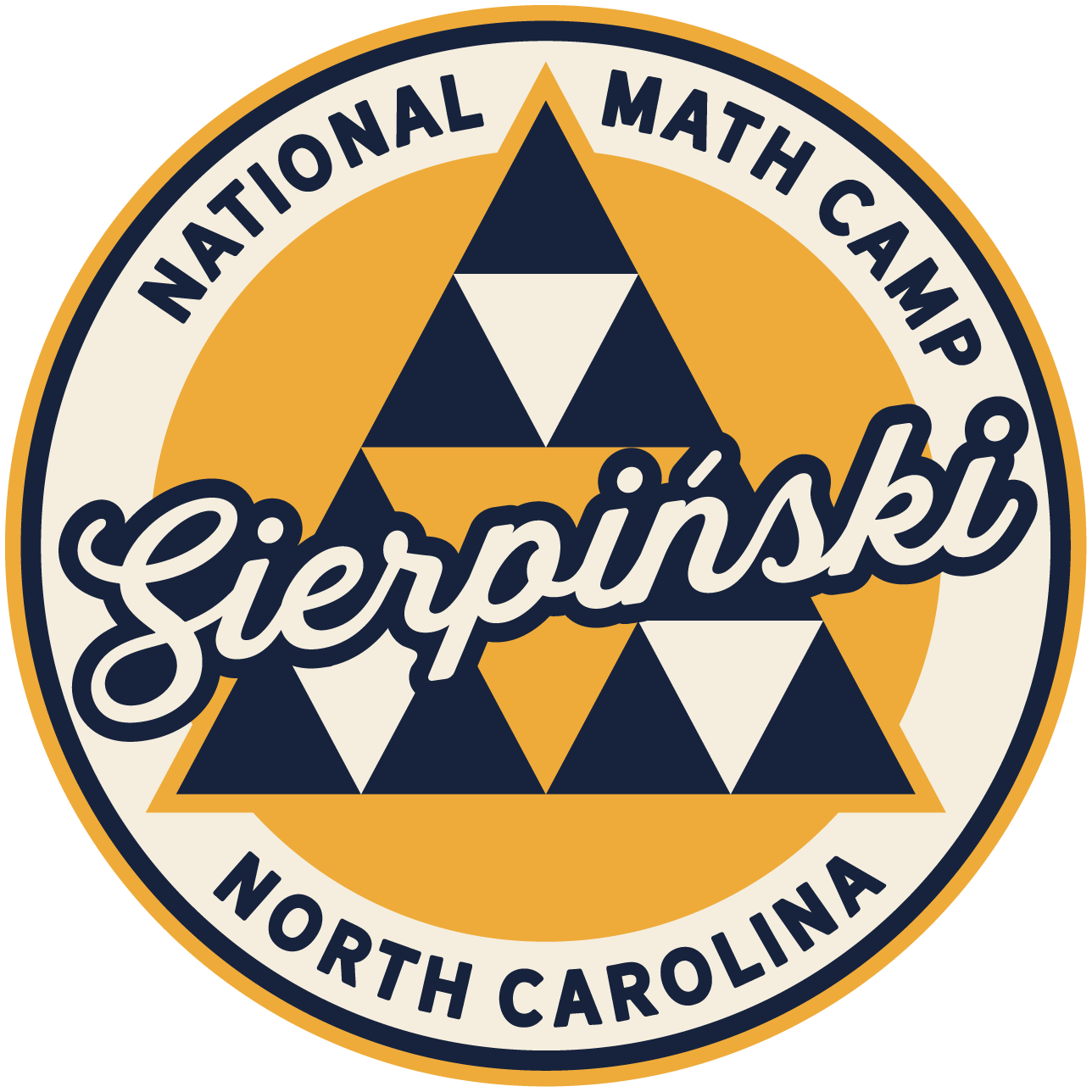
Camp Sierpiński is a 2-week residential camp for students aged 11 – 14. It’s named in honor of Waclaw Sierpiński, a Polish mathematician. Our camp mascot is the Sierpiński triangle, which is a playful nod to our research triangle location. From fractals to the Axiom of Choice and the Continuum Hypothesis, much of Sierpiński’s work delved into the strange and beautiful properties of infinity. These topics embody the sense of curiosity and wonder we aim to inspire in our students.
At Camp Sierpiński, we’re creating an environment where students don’t just learn math — they discover a sense of belonging, develop resilience, and build a lifelong connection with the mathematical community. Our camp will empower participants to experience math as both fascinating and challenging, demonstrating that it’s not just fun when it’s easy, but even more rewarding when you push through difficulties.
2026 Camp Dates & Location
Location: William Peace University, Raleigh, NC
Session 1: 6/28/2026 - 7/10/2026
Session 2: 7/12/2026 - 7/24/2026
Camp Sierpiński is hosted at William Peace University, a small and picturesque campus tucked within Raleigh’s vibrant downtown. Despite its central location, the campus feels intimate and calm — an ideal backdrop for deep thinking and meaningful connection. Students live in modern residence halls just steps from dedicated classrooms and community spaces, with lush courtyards and shaded walkways creating plenty of quiet corners for conversation, problem-solving, or reflection. The setting offers the perfect balance: safe, beautiful, and inspiring.
Want to learn more? Watch a recording of our February live webinar hosted by Art of Problem Solving here.
Dates don’t quite work? Prefer the west coast? Check out Camp Conway!

Application deadlines
Applications for new students are now open! Join our mailing list to be notified of upcoming deadlines.
We review applications in several rounds. Early applicants receive priority consideration and access to discounted tuition. After the regular admissions deadline, we will continue to review applications on a rolling basis if space is still available.
Early Round 1: 2/1/2026
Early Round 2: 3/1/2026
Regular: 3/29/2026
What We're Looking For
Camp Sierpiński is designed for students ages 11 – 14 as of June 1, regardless of grade level. Below is what we look for in students who will flourish in our community.
Strong Interest in Math:
Students who thrive at Camp Sierpiński are deeply curious about mathematics and enjoy thinking about ideas beyond the classroom. They love exploring challenging problems, asking “what if?” questions, and sometimes spending hours — or even days — unraveling a single idea. They’re excited by the prospect of doing math for much of the day for two weeks, and they look forward to being surrounded by other kids who share their enthusiasm and want to dive deeply into big, beautiful mathematical ideas.
Math Knowledge & Problem-Solving Skills:
Since school math curricula vary widely across the country and globe, we use Art of Problem Solving (AoPS) as our reference point when describing prerequisites. Our main mathematical prerequisite for Camp Sierpiński is completion of AoPS Prealgebra or an equivalent curriculum. You can take this test to determine if you have mastered the prerequisite content. Please don’t overlook the geometry, counting/probability, and problem solving questions — these topics are often not emphasized in other prealgebra curricula but are important for our camps!
We’ve also found that the comfort with linear equations gained in an introductory algebra course, such as AoPS Introduction to Algebra, can be very helpful.
Has your student progressed well beyond the level of introductory algebra? Don’t worry! This is common in our community, and our camps are designed to challenge these students too — there is so much deep, beautiful, and exciting mathematics to explore!
Residential Camp Readiness:
At NMC, our mission goes beyond simply teaching mathematics. We strive to create a supportive, enriching residential environment that meets the unique social-emotional needs of mathematically gifted children. Campers spend two intensive weeks living, learning, and playing together, which can be both exciting and challenging. Many gifted students experience distinct emotional, intellectual, and social dynamics, and being away from home (especially while surrounded by peers for long days of activities!) requires a level of readiness for independence, connection, and flexibility.
To ensure every camper is supported throughout this experience, each camp includes a Camper Support Director on the leadership team. This role is held by a trained professional with deep experience supporting gifted and twice-exceptional (2e) students in residential and school settings. The Camper Support Director provides compassionate, individualized guidance during camp life and partners closely with families to help students feel safe, understood, and comfortable navigating both the academic and social aspects of camp. Their presence helps ensure that each camper can flourish — socially, emotionally, and academically.
You can read more about our approach here.
A Typical Day
Campers will attend classes five days each week, and will spend about six hours each day doing mathematics, with plenty of breaks throughout. Our daily schedule will include:
Topics Classes
Students will take a different Topics Class each week, which will meet twice per day. These classes are designed to allow students to dive deeply into an area of math. Topics classes are active, exploratory, and student-driven, with lots of room for unexpected detours. The topics that are offered vary session-to-session and year-to-year, as they depend on the interests and expertise of our faculty. However, potential topics could include graph theory, group theory, combinatorics, infinity, number theory, cryptography, knot theory, coding theory, voting theory, partitions, combinatorial games, projective geometry, and more! You can find sample course descriptions from previous years here.

Math Explorations Class
All students will participate in our signature Math Explorations class, designed to teach them what it truly means to be a mathematician. Being a mathematician goes beyond solving problems posed by a teacher — it’s about learning to ask your own questions and exploring them deeply. In this class, students will engage with the full mathematical process: from formulating their own questions to exploring solutions, writing up their findings, and presenting their results. Along the way, they’ll sharpen their problem-solving and communication skills, while also building persistence and a deeper appreciation for the beauty of mathematics.

Morning Assembly
After some quick announcements, our morning assemblies will generally feature an interactive math lecture or other activity. These are designed to widen students’ mathematical horizons, exposing them to many new types of math. Most of these will be delivered by our faculty, but we also expect to have a guest or two each session!

Open Math Time
During this self-directed time, students can chat with our faculty or spend some extra time thinking about whatever math most sparked their curiosity that day. We’ll also have some additional problems and puzzles available if they need some extra inspiration.

Activity Periods
Twice each day, we’ll have activity periods with multiple options for campers to choose from, such as board games, origami, karaoke, ultimate frisbee, soccer, etc. Activity options will vary day-to-day and be based on the interests of our campers and staff.

Other Activities
On days when we don’t have class, campers will participate in a mix of mathematical and recreational activities, such as team competitions and challenges, a camper-led variety show, and maybe even a field trip! These activities are meant to build community, foster friendships, and make lasting memories.

Want an even better sense of what camp is like?
How to Apply
Application details and timeline for summer 2027 will be shared by the end of November. Join our mailing list to get updates about our summer 2027 camps.
A single application allows you to apply to both Camp Conway and Camp Sierpiński. You’ll indicate your program preferences in the application form.
We review applications in several rounds. Early applicants receive priority consideration and access to discounted tuition. After the regular admissions deadline, we will continue to review applications on a rolling basis if space is still available.
Application Timeline
| Application Round | Application Deadline | Recommender Deadline | Receive Decision By |
|---|---|---|---|
| Alumni Only | Dec 31 | N/A | End of Jan |
| Early 1 | Feb 1 | Feb 8 | End of Feb |
| Early 2 | Mar 1 | Mar 8 | End of Mar |
| Regular | Mar 29 | Apr 6 | End of Apr |
Application Checklist:
- Initial Application
- Main Application
- Student Short Answer Form
- Two Recommendations
- Math Exploration Problems
Initial Application:
This initial application includes some basic info about your student and a short math self-assessment for them to complete. This will give you a good sense of whether they are mathematically ready for our camp before diving into the rest of the application.
Main Application:
The main application includes parent short answer questions, recommendation information and camp/session preferences. It also allows you to trigger an email to your mathematical recommender to complete the recommendation form and to your student to complete the student short answer form.
Student Short Answer Form:
While most of the application is completed by the parent, this is where we want to hear directly from the student applicant!
Recommendations:
In most cases, two recommenders are required: one mathematical and one non-mathematical.
The mathematical recommender should be a math teacher, math coach, or another adult who knows the student well in a mathematical setting. They will receive a short online form to complete. As shown in the chart above, there is a one-week grace period for the recommendation to be completed after the relevant application deadline.
The non-mathematical recommender should be an adult who regularly interacts with the student in an in-person group setting, such as a teacher, club advisor, athletic coach, or scout leader. They do not need to complete an online form — we’ll reach out to them only if we need additional information.
Please note that recommenders cannot be parents or close relatives.
If the student attended another in-person math summer program this past summer, we may be able to skip the normal recommendation process and instead just reach out to that program directly. Programs we can currently do this with include: Bard Math CAMP, BEAM Summer Away, Campersand (C&!), Epsilon Camp, Mainline Classical Academy Summer Math Camp, Math in the Mountains, Mathpath, Orlando Math Circle Summer Mathematics Leadership Institute & Summer Camp.
Math Exploration Problems:
After submitting the main application form, you will gain access to the Math Exploration Problems. Once you click to start the timer, you must upload a PDF with the student’s work within 48 hours. We recommend planning for your student to spend 1 – 2 hours on each of the two parts. For guidance on how to set your student up for success, please see our blog post here.
Tuition & Financial Aid
Tuition and financial aid details for summer 2027 will be announced by the end of November. Join our mailing list to get updates about our summer 2027 camps.
2026 Tuition:
Tuition for Camp Sierpiński ranges from $3,695 to $3,995, depending on the application round. We offer generous need-based financial aid, including awards that cover up to 100% of tuition plus travel costs.
Tuition includes all camp-related expenses: room and board, educational materials, recreational activities, and full access to our expert faculty.
To receive the discounted tuition associated with your application round, you must enroll within two weeks of receiving your acceptance.
We also offer flexible payment options to make planning easier for families. You may pay in full at the time of registration or select a payment plan with installments. Detailed payment instructions will be provided upon registration.
Refund Policy: We understand that plans can change. Families who withdraw on or before April 30th will receive a refund of tuition minus a $200 administrative fee. After April 30th, tuition is non-refundable.
Sierpiński Tuition by Application Round
| Application Round | Application Deadline | Full Tuition* |
|---|---|---|
| Alumni Only | Dec 31 | $3,695 |
| Early 1 | Feb 1 | $3,795 |
| Early 2 | Mar 1 | $3,895 |
| Regular | Mar 29 | $3,995 |
| Rolling | N/A | $3,995 |
*Many campers attend free or at greatly reduced cost. See the financial aid table below — and please don’t hesitate to reach out if finances are a concern!
Financial Aid:
NMC is committed to making our summer camp experiences accessible to all qualified students. We offer need-based financial aid, up to 100% of tuition and travel costs. Our admissions process is need-blind; financial aid is reviewed only after a student receives an offer of admission. The financial aid application is short and simple — usually requiring just the first page of your most recent tax return.
For a breakdown of tuition assistance by annual family income, please click the link below. We are able to guarantee financial aid at the levels shown in the table for all qualifying families, regardless of when they apply. Families with extenuating circumstances are welcome to include additional details for consideration.
Please note that financial aid is not available to international students.
2026 Faculty & Staff
Faculty & Visiting Speakers
Meet the mathematicians and educators who joined us for Summer 2026.

Katie Johnson
Academic Director

Neil Calkin
Faculty (S1)

Eliza Gallagher
Faculty (S1)

Jacob Miles
Faculty (S1)

Erik Insko
Faculty (S1 & S2)

Gabe Rosenberg
Faculty (S2)

Sarah Allred
Faculty (S2)

Corrie Ingall
Faculty (S2)

Viktor Grigoryan
Faculty (S2)

Christopher Recchia
Apprentice Faculty

Anna Paulec
Apprentice Faculty
Maria Droujkova
Visiting Speaker

Jenna Carpenter
VISITING Speaker

Juan Gil
VISITING Speaker

Jerry Tuttle
Visiting Speaker
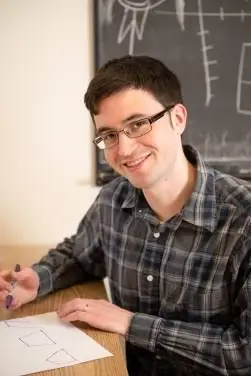
Ben Orlin
Visiting Speaker
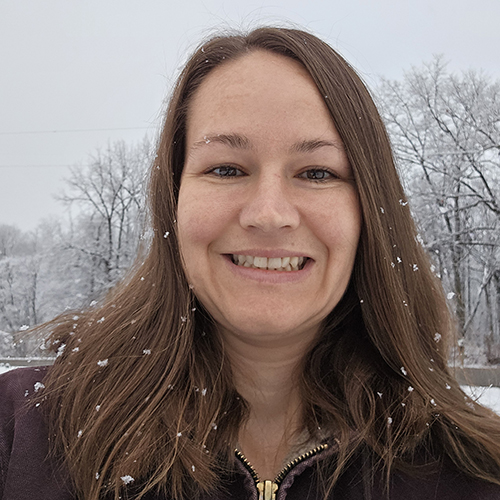
Melissa Glass
Visiting Speaker
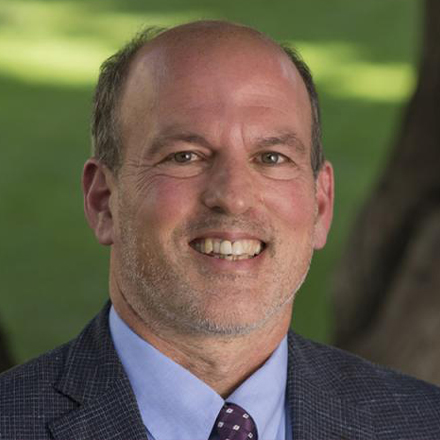
Rick Sommer
Visiting Speaker
Camp Staff
Our campers are supported by an exceptional team of counselors, learning assistants, and health staff, guided by experienced camp leadership.

Brendan Caseria
Camp Director

Sharee Brantley Garner
Camper Support Director

Rebecca Go
Head Counselor

Monique Booker
Operations Assistant

Tamika Martin
Camp Nurse
Read More
Read Less

Ethan Petersen
Learning Assistant

Djeneba Diop
Learning Assistant

Ilana Lavene
Learning Assistant

Madeline Alberts
Counselor

Troy Quesinberry
Counselor

Sarah Cole
Counselor

Janelle Anokye
Counselor

Isabella Turpen
Counselor
